

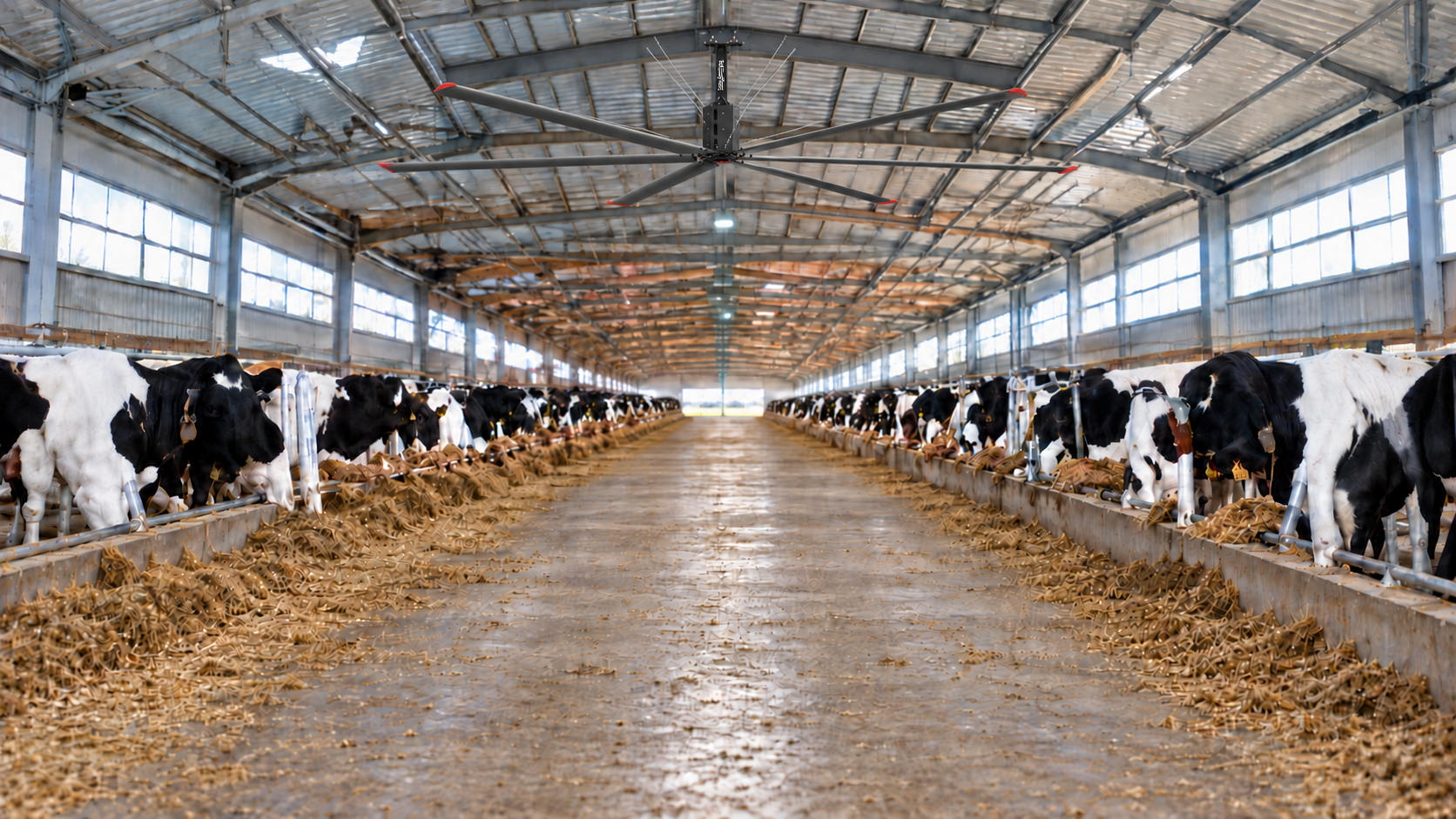
If you manage large-volume spaces such as factories, warehouses, or livestock barns, you may have heard of HVLS fans. HVLS stands for **High-Volume, Low-Speed**; these are large-diameter ceiling fans designed to move massive amounts of air at low rotational speeds.
Unlike small, high-speed fans that are noisy and provide only localized airflow, HVLS systems generate a gentle, wide-reaching breeze that effectively covers areas spanning thousands of square meters. Valued for their energy efficiency and ability to enhance comfort, they are becoming increasingly popular for climate control in industrial and commercial settings. Below is an overview of the basic principles and key advantages of HVLS fans.
The Basics: How HVLS Fans Work
The core concept behind HVLS fans is simple: **moving large volumes of air at low speeds.
HVLS fans feature large-diameter blades mounted high overhead. Rotating at low speeds, they push a broad column of air downward. Upon reaching the floor, the air spreads horizontally in all directions, creating a continuous breeze throughout the workspace.
This produces two primary effects:
1. Summer Cooling (Wind-Chill Effect): By accelerating the evaporation of sweat from the skin, they lower the perceived temperature by 4–6°C, even if the actual ambient temperature remains unchanged.
2. Year-Round Destratification: They mix warm air accumulating near the ceiling with cooler air near the floor, eliminating the temperature stratification commonly found in high-ceilinged buildings.
Rather than generating cold air like air conditioners, HVLS fans optimize air circulation to make large spaces feel more comfortable. They can operate independently or in conjunction with existing HVAC systems, industrial air conditioners, and dehumidifiers to achieve superior climate control.
Key Advantages of HVLS Fans
1. Enhanced Employee Comfort and Productivity
Heat stress and stagnant air can diminish employee focus and productivity. Consistent airflow helps alleviate heat-related fatigue and reduces the risk of heat-induced workplace injuries. A comfortable working environment helps reduce employee turnover in manufacturing plants and warehouses.
2. Significant Reduction in Energy Costs
HVLS motors consume only a fraction of the energy required by large air conditioning units. Their low-speed design ensures low energy consumption, a long service life, and minimal routine maintenance. When HVLS fans are used in conjunction with air conditioning systems, **cooling energy consumption can be reduced by 20%–30%**.
3. Humidity and Condensation Control
Stagnant, warm air often holds significant moisture. Continuous airflow reduces moisture accumulation on concrete floors, inhibits condensation, and lowers the risk of slips and falls. This is particularly important for garment factories, distribution centers, and humidity-sensitive livestock facilities.
4. Wide Range of Applications
HVLS fans are suitable for various large, high-ceiling spaces:
- Manufacturing and assembly workshops
- Warehouses and logistics distribution centers
- Dairy barns and livestock farms
- Sports arenas, exhibition halls, and large retail stores
- Aircraft hangars and other large commercial buildings
Key Considerations When Purchasing HVLS Fans
Not all HVLS fans perform the same. When selecting a supplier, compare the following key factors:
- Compatibility of fan diameter and airflow coverage with the building's dimensions
- Use of permanent magnet brushless motors for high efficiency and quiet operation
- Reliable mounting structures and fall-prevention safety measures
- Variable speed control and centralized control capabilities for multiple fans
- Use of heavy-duty components suitable for dusty industrial environments
- Significant price and performance variations exist in the market; high-airflow models can deliver several times the airflow of low-cost alternatives.
Conclusion
HVLS fans are large, low-speed overhead fans designed specifically for air circulation in high-ceiling spaces. While they do not directly cool the air, they alleviate heat-related discomfort, balance indoor temperatures, and significantly reduce energy costs. For business owners struggling with stifling heat in workshops or warehouses, HVLS fans offer a highly cost-effective environmental control solution with a strong return on investment.
If you are interested, please contact 1stCoolFan.
Navigation
Send Us A Message
Please give us a message
Suzhou First Machinery Technology Co., Ltd